

7 Bridal Gown Dry Cleaning Tips to Protect Your Dress

Your wedding dress is one of the most meaningful garments you’ll ever own. Long after the celebrations end, it serves as a reminder of one of life’s biggest milestones. Whether your gown is crafted from luxurious silk, elegant satin, delicate lace, or features intricate beadwork, proper care is essential to preserve its beauty.
Many brides assume their dress is clean because no stains are visible. In reality, invisible residues from makeup, body oils, champagne, perfume, sweat, and outdoor dust can begin damaging delicate fibres almost immediately. Over time, these hidden stains may oxidise, causing yellowing, fabric weakening, and permanent discolouration.
According to Hiren Patel, Owner of New Image Dry Cleaners, one of the most common mistakes brides make is waiting too long before having their gown professionally cleaned. The sooner contaminants are removed, the better the chances of preserving both the fabric and the intricate details.
In this guide, you’ll discover seven expert bridal gown dry cleaning tips that professional garment care specialists recommend to help protect your wedding dress for years to come.
What Is Bridal Gown Dry Cleaning?
Bridal gown dry cleaning is a specialised cleaning process designed specifically for wedding dresses. Unlike standard garment cleaning, it considers the unique combination of delicate fabrics, embellishments, construction methods, and stain types found in bridal gowns.
Every wedding dress requires an individual assessment before cleaning begins. A satin ball gown, for example, needs a different treatment than a lightweight lace gown or a silk designer dress. Professional cleaners inspect the fabric, identify visible and hidden stains, test colour stability where necessary, and select the safest cleaning method for the garment.
A professional wedding dress cleaning service typically includes:
- Detailed garment inspection
- Fabric identification
- Individual stain treatment
- Professional dry cleaning using fabric-safe solvents
- Gentle hand cleaning for delicate areas
- Pressing and finishing
- Optional wedding dress preservation
The goal isn’t simply to make the gown look clean—it’s to protect its structure, colour, texture, and craftsmanship while reducing the risk of long-term damage.
Why Professional Wedding Dress Dry Cleaning Matters

Tip #1: Clean Your Wedding Dress Before Hidden Stains Become Permanent
One of the biggest misconceptions is that a wedding dress can be cleaned months—or even years—after the wedding without any consequences.
Unfortunately, stains don’t remain unchanged.
Sugary drinks, sweat, makeup, perfume, sunscreen, and body oils continue reacting with the fabric long after the celebration has ended. As these residues oxidise, they become darker, harder to remove, and more likely to leave permanent marks.
Imagine a bride celebrating at a beach wedding in Perth. Her gown may collect fine sand, salt, sunscreen, and moisture along the hemline. Although the dress appears clean the following day, those particles continue affecting the fabric if left untreated.
Professional cleaning within the first few weeks offers the best opportunity to remove both visible and invisible stains before permanent damage occurs.
Why Immediate Cleaning Makes a Difference
- Prevents hidden stains from oxidising
- Improves stain removal success
- Protects delicate fabrics from long-term deterioration
- Reduces the risk of yellowing during storage
- Prepares the gown for preservation
Tip #2: Choose a Wedding Dress Cleaning Specialist—Not Just Any Dry Cleaner
Not every dry cleaner has the experience or equipment required to clean wedding dresses safely.
A bridal gown often combines several delicate materials within a single garment. Silk, satin, lace, tulle, organza, sequins, pearls, embroidery, and hand-sewn beadwork all respond differently to cleaning.
Using the wrong solvent, excessive heat, or aggressive stain removal techniques can permanently damage these delicate components.
Experienced bridal gown cleaning specialists understand how different fabrics react during the cleaning process. Rather than applying a single treatment across the entire gown, they tailor the cleaning method to each fabric and stain type.
Before choosing a cleaner, ask questions such as:
- Do you specialise in wedding dress cleaning?
- Will my gown be inspected before cleaning?
- How are delicate fabrics like silk and lace treated?
- Do you hand-clean beaded or embroidered sections?
- Can you remove invisible stains before preservation?
- Do you offer wedding dress preservation?
These questions can help you identify a cleaner with genuine bridal garment care expertise.
Tip #3: Every Stain Is Different—Treat It the Right Way
Not all wedding dress stains behave the same way.
Professional cleaners first identify the source of each stain before deciding how to remove it safely. Applying one cleaning solution to every stain can damage delicate fabrics or make certain stains even harder to remove.
For example:
- Makeup contains oils that require specialised solvent treatments.
- Grass stains contain natural pigments that penetrate fabric fibres.
- Champagne and sugary drinks leave invisible residues that oxidise over time.
- Sweat contains salts and proteins that gradually weaken delicate fabrics.
Flower pollen can permanently stain light-coloured gowns if rubbed into the fabric.
This is why professional stain removal always begins with a detailed inspection rather than immediate cleaning
Common Wedding Dress Stains
The most common stains found on bridal gowns include:
- Foundation and makeup around the neckline
- Lipstick marks
- Champagne and white wine spills
- Cake frosting and sugary drinks
- Sweat and body oils
- Grass and mud on the hemline
- Dust from outdoor photography
- Fake tan and sunscreen
- Perfume residue
- Flower pollen from bouquets
According to Hiren Patel, identifying the stain before selecting the cleaning method is one of the most important parts of professional bridal gown care. Treating stains individually not only improves cleaning results but also helps protect delicate fabrics from unnecessary stress.
Add Tip #4: Protect Delicate Fabrics and Embellishments
Every wedding dress is unique, and so is the way it should be cleaned. Designer gowns often combine multiple fabrics and decorative elements that require specialised handling to prevent damage.
Silk, satin, lace, tulle, organza, chiffon, and crepe all react differently to cleaning solutions, moisture, and heat. A method that works for one fabric may damage another. That’s why professional bridal gown cleaning is never a one-size-fits-all process.
Decorative details also require extra attention. Beadwork, pearls, sequins, crystals, embroidery, and lace appliqués are carefully inspected before cleaning to ensure they remain secure throughout the process.
According to Hiren Patel, Owner of New Image Dry Cleaners, understanding how each fabric and embellishment responds to cleaning is one of the biggest differences between a bridal gown specialist and a general dry cleaner.
How Professionals Protect Your Wedding Dress
- Test delicate fabrics before cleaning.
- Select fabric-safe cleaning methods.
- Hand-clean intricate lace and embellishments.
- Protect beads, sequins, and embroidery during treatment.
- Use controlled pressing techniques to maintain the gown’s original shape.
Professional care isn’t just about removing stains—it’s about preserving the craftsmanship that makes your wedding dress unique.
Tip #5: Understand the Professional Wedding Dress Cleaning Process
Many brides wonder what actually happens after they hand over their gown to a bridal gown cleaning specialist.
Professional wedding dress cleaning involves several carefully planned stages, each designed to clean the gown safely while protecting delicate materials.
Step 1: Detailed Garment Inspection
The gown is examined under bright lighting to identify:
- Fabric types
- Visible and hidden stains
- Loose stitching
- Damaged embellishments
- Areas that require hand treatment
This assessment helps determine the safest cleaning approach.
Step 2: Individual Stain Treatment
Instead of using one cleaning solution for the entire gown, each stain is treated based on its source.
Oil-based makeup, grass stains, food spills, body oils, and sugary residues all require different stain-removal techniques.
Step 3: Professional Dry Cleaning
The dress is cleaned using professional-grade solvents designed for delicate garments. These cleaning agents remove contaminants while helping preserve the fabric’s colour, texture, and structure.
Step 4: Hand Cleaning Delicate Areas
Intricate sections such as lace sleeves, embroidered panels, pearl detailing, and crystal embellishments receive careful hand treatment to minimise stress on the garment.
Step 5: Professional Pressing and Finishing
Once cleaning is complete, the gown is professionally pressed to restore its original silhouette. A final quality inspection ensures stains have been removed, embellishments remain secure, and the dress is ready for preservation or storage.
Knowing how the process works gives brides confidence that their gown is receiving the expert care it deserves.
Tip #6: Store Your Wedding Dress the Right Way
Professional cleaning protects your wedding dress, but proper storage is equally important.
Even a perfectly cleaned gown can develop yellowing, mould, or fabric damage if it’s stored in unsuitable conditions.
One of the most common mistakes is leaving the dress inside the plastic garment bag provided by the bridal boutique. While these bags are suitable for transport, they’re not designed for long-term storage because they trap moisture and restrict airflow.
Best Wedding Dress Storage Tips
- Store the dress only after professional cleaning.
- Choose an acid-free preservation box.
- Use acid-free tissue paper between folds.
- Keep the gown in a cool, dry environment.
- Avoid direct sunlight and humid areas.
- Keep the dress away from garages, sheds, and roof spaces.
- Handle the gown with clean hands.
- Avoid hanging heavy dresses for extended periods, as this may stretch the fabric.
Simple storage practices can significantly extend the life of your wedding gown.
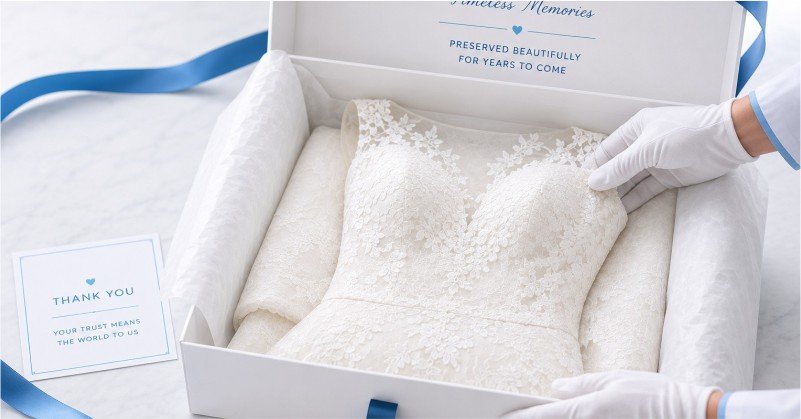
Tip #7: Preserve Your Wedding Dress for Future Generations
Cleaning removes stains.
Preservation protects your dress from future damage.
Once your gown has been professionally cleaned, preservation helps safeguard it against dust, humidity, insects, light exposure, and natural ageing.
Whether you plan to pass your dress on to a family member, keep it as a cherished keepsake, or simply want it to remain in excellent condition, preservation offers valuable long-term protection.
Benefits of Wedding Dress Preservation
Helps prevent yellowing.
- Protects delicate fabrics from ageing.
- Reduces exposure to dust and airborne pollutants.
- Maintains the gown’s shape and structure.
- Preserves intricate lace, embroidery, and beadwork.
- Extends the lifespan of your wedding dress.
For most brides, preservation is the final step in protecting one of the most sentimental garments they’ll ever own.
Common Mistakes Brides Make After Their Wedding
Even with the best intentions, small mistakes can shorten the lifespan of a wedding dress.
Avoid these common errors:
1. Waiting Too Long Before Cleaning
Hidden stains become more difficult to remove the longer they’re left untreated.
2. Trying DIY Cleaning Methods
Household detergents, bleach, vinegar, and stain removers may permanently damage delicate bridal fabrics.
3. Storing the Dress Without Cleaning It
Invisible contaminants continue oxidising during storage, increasing the risk of permanent yellowing.
4. Keeping the Dress in a Plastic Garment Bag
Plastic garment bags trap moisture and aren’t suitable for long-term preservation.
5. Choosing a Cleaner Based Only on Price
Wedding dresses require specialist knowledge. Selecting a cleaner solely because they’re inexpensive can lead to costly mistakes.
Why Brides in Perth Trust New Image Dry Cleaners
Every wedding dress tells a unique story, and every gown deserves personalised care.
At New Image Dry Cleaners, each dress is carefully inspected before cleaning begins. The team evaluates the fabric, embellishments, construction, and stain types to determine the safest treatment for that specific gown.
According to Hiren Patel, no two wedding dresses should be cleaned exactly the same way. A customised approach helps achieve the best cleaning results while protecting delicate fabrics and intricate detailing.
With years of experience caring for bridal gowns, the team has helped countless Perth brides restore and preserve dresses worn at beach weddings, vineyard celebrations, garden ceremonies, and luxury venues across Western Australia.
Their focus has always remained the same—treat every wedding dress with the same care and attention they would give their own family’s treasured garments.
Final Thoughts
Your wedding dress deserves more than ordinary garment care.
Professional bridal gown dry cleaning removes hidden stains, protects delicate fabrics, and helps preserve the beauty of your gown long after your wedding day.
By cleaning your dress promptly, choosing an experienced bridal gown specialist, storing it correctly, and investing in professional preservation, you can protect your gown from yellowing, fabric deterioration, and permanent stain damage.
As Hiren Patel, Owner of New Image Dry Cleaners, often advises, the best time to care for your wedding dress is before hidden stains have the chance to become permanent. Taking action early is one of the simplest ways to ensure your gown remains as beautiful as the day you wore it.
Frequently Asked Questions About Bridal Gown Dry Cleaning
Ideally, within a few weeks after your wedding. Prompt cleaning helps remove invisible stains before they oxidise and become permanent.
Many stains can be successfully treated, especially when addressed early. However, older oxidised stains may become more difficult to remove completely.
Yes. Professional bridal gown specialists use fabric-safe cleaning methods and carefully assess each gown before treatment to protect delicate materials and embellishments.
Answer:-
Absolutely. Storing a dress without cleaning allows hidden contaminants to continue damaging the fabric, increasing the risk of yellowing and permanent staining. machine washed.
Answer:-
If you want to keep your gown in excellent condition for years to come, professional preservation is a worthwhile investment. It helps protect the dress from dust, moisture, light exposure, and natural ageing while extending its lifespan. the best outcomes.