

Wedding Dress Preservation in Perth: 5 Mistakes Brides Should Avoid

Your wedding dress may hold memories of a special day, but it also needs the right care after the celebration. Makeup, perspiration, food spills and dirt along the hem can leave marks that are not always immediately visible.
For brides considering wedding dress preservation in Perth, cleaning is only one part of protecting a gown. The way it is handled, packaged and stored can also affect its condition over time. Delicate fabrics, embroidery, lace and decorative details may require particular attention.
Understanding common preservation mistakes can help you make informed decisions about cleaning and long-term storage. Here are five mistakes to avoid, along with practical advice on professional wedding dress care.
Why Your Wedding Dress Needs Special Attention After the Wedding
Wedding dresses can collect hidden stains from perspiration, makeup, food, drinks, and outdoor dirt. Even marks that are not immediately visible may become more difficult to treat over time. Delicate fabrics such as silk, satin, lace, and tulle also require careful handling to avoid damage.
Cleaning focuses on removing stains, dirt, and unwanted residues. Preservation goes further by considering suitable packaging, fabric support, and storage conditions to help protect the gown over time. Understanding this difference can help you make informed decisions about your wedding dress care.
5 Wedding Dress Preservation Mistakes That Could Damage Your Gown
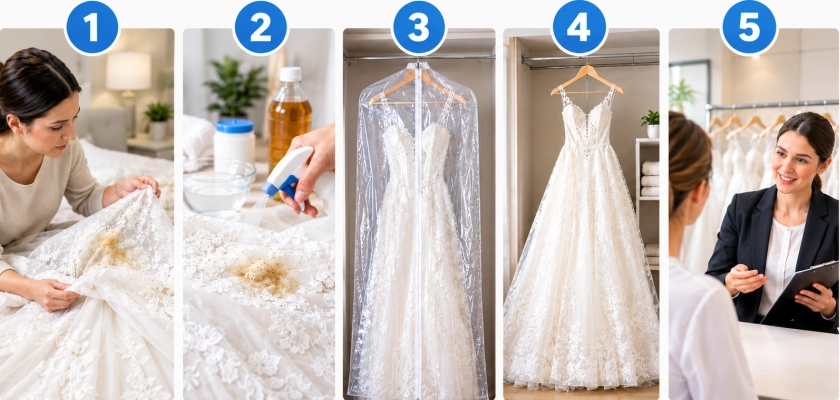
Mistake 1: Putting Your Dress Away Without Checking for Hidden Stains
Storing a wedding gown without checking for hidden stains is a common preservation mistake. Many brides look at the front of their gown, notice nothing unusual, and assume it does not need cleaning. But the most troublesome marks are not always visible.
Perspiration around the underarms, body oils near the neckline, and drink splashes can remain unnoticed. Dirt may also collect inside the hem, particularly after an outdoor celebration. Leaving these residues untreated can make certain stains harder to remove later.
Recommended precautions :
Before storing your gown, check several areas:
- The bottom edge and underside of the skirt
- The neckline and inner bodice
- Underarm sections
- Sleeves, cuffs, and delicate lace panels
- Areas exposed to food, makeup, or drinks
Identify any visible marks or known spills before your appointment. A professional garment assessment can help detect less obvious staining and determine suitable treatment options. If possible, arrange a garment assessment soon after the celebration rather than leaving cleaning until an unknown future date.
A tip for Perth brides: If your ceremony took place near the beach, in a garden, or at an outdoor venue, tell your cleaner about any contact with sand, soil, or grass. This information may help them assess the garment more carefully.
Mistake 2: Treating Stains With Products Found Around the House
Imagine finding a makeup mark on your wedding dress after the reception. Your first instinct might be to reach for detergent, stain-removing spray, or another household product.
However, a product that works on everyday clothing may not be suitable for bridal fabrics. Some gowns combine different materials within a single design. The outer layer might be delicate lace, while the lining contains satin or another fabric. A treatment that suits one section may cause problems elsewhere.
Rubbing can disturb delicate fibres. Excess moisture may leave watermarks. Harsh chemicals can also affect colour or damage decorative details.
A safer approach involves three simple steps:
- Leave the affected area untreated until you receive suitable advice.
- Make a note of what caused the stain, if you know.
- Ask a professional to assess the fabric before attempting removal.
Avoid applying bleach, soaking the entire dress, or using heat to dry a stained section. Be particularly careful around sequins, embroidery, glued decorations, and fragile lace. If you have already applied a cleaning product, tell the cleaner what you used.
Why does this matter?
Professional stain treatment depends on the material, the type of residue, and previous cleaning attempts. Using the wrong method first could make the next treatment more complicated.
Mistake 3: Keeping the Dress in Its Original Plastic Cover
The protective bag provided when you purchased your wedding dress is convenient for transport. That does not automatically make it suitable for years of storage. Plastic covers vary in their materials and construction. Some can create unfavourable storage conditions, particularly when moisture becomes trapped.
Ordinary cardboard boxes may also contain materials unsuitable for direct contact with delicate textiles. The goal is not simply to keep dust away. You also need to consider moisture, light, physical support, and the materials touching the dress.
Recommended wedding gown storage methods :
Choose a storage arrangement based on the garment’s fabric and structure. For many wedding gowns, this may involve:
- A box intended for textile preservation
- Suitable acid-free tissue for supporting folds
- A clean storage space away from direct sunlight
- Protection from damp conditions and pests
- Periodic checks for signs of damage
When preparing a gown for boxed storage, tissue can help support areas that might otherwise develop sharp folds. This can be particularly helpful with layered skirts and delicate decorative sections.
However, no packaging method can promise that a wedding dress will remain in perfect condition forever.
Perth storage tip: Avoid placing a preserved gown in a damp shed, an exposed garage, or another space with large temperature changes. An indoor location with relatively stable conditions is generally a more suitable choice.
Mistake 4: Leaving a Heavy Wedding Gown Hanging for Years
Long-term hanging can place unnecessary strain on heavy or intricately constructed gowns. Unfortunately, some gowns are not designed to carry their full weight from the shoulders for extended periods. This matters most for dresses with heavy skirts, long trains, structured bodices, or detailed beadwork.
Over time, the downward pull may strain seams, alter the garment’s shape, or stretch delicate sections. Thin straps and unsupported shoulders can be particularly vulnerable.
Choosing the appropriate storage method :
The answer depends on the design. A lightweight gown may be suitable for hanging when it receives the right support.
A heavier dress may benefit from careful boxed storage that spreads its weight more evenly. If hanging is recommended:
- Choose a properly sized, supportive hanger.
- Use suitable internal hanging loops where provided and approved.
- Avoid placing weight on fragile straps or decorative sections.
- Keep the dress protected from unnecessary handling.
For boxed preservation, the skirt, bodice, and train should be positioned carefully to avoid excessive pressure on delicate areas. Ask your garment-care specialist which approach suits your particular wedding dress.
The correct choice should be based on construction and condition rather than convenience alone.
Mistake 5: Choosing a Wedding Dress Cleaning Service Based on Price Alone
Comparing prices is reasonable, but the lowest advertised price may not include every service your gown needs. Cleaning, stain treatment, preservation packaging, and repairs may involve separate charges.
Before booking wedding dress cleaning in Perth, ask what the quoted price covers, how delicate fabrics and embellishments are assessed, whether preservation packaging is included, and how long the process takes.
Also, consider the cleaner’s experience with bridal garments, the proposed treatment, and how clearly they explain the process. Customer reviews can provide additional context, but your gown’s fabric, condition, and existing damage should be assessed before treatment.
A clear quote and an explanation of the available options can help you make a more informed decision.
What Happens During Professional Wedding Dress Cleaning and Preservation?
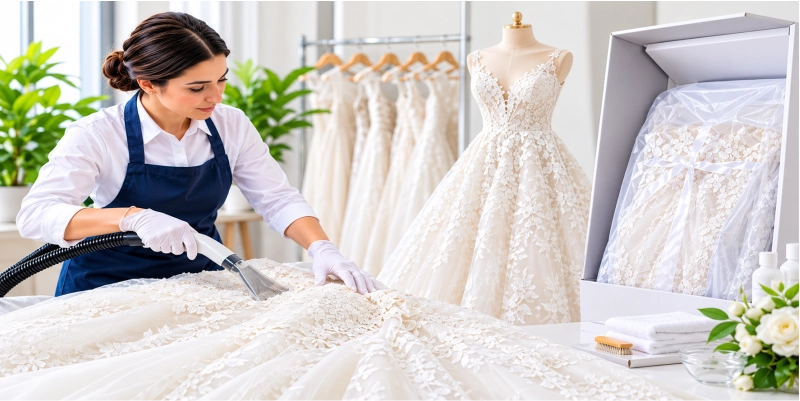
Professional wedding gown preservation typically involves several stages, from fabric assessment to protective packaging.
Although individual providers use different methods, wedding dress care commonly involves the following stages.
Assessing the dress
The cleaner examines the fabric, construction, embellishments, and condition. Visible stains, weakened stitching, and delicate areas can be identified before treatment.
Selecting an appropriate cleaning method
Not every wedding gown requires the same treatment. Depending on its materials and care instructions, the cleaner may recommend dry cleaning, suitable wet-cleaning techniques, or more targeted care.
Preparing the garment for storage
The clean dress is arranged carefully, with attention to its folds, delicate sections, and weight distribution.
Choosing suitable protective packaging
Where preservation boxing is appropriate, the gown is placed in a suitable box with protective materials designed for textile storage. The exact approach should reflect the gown’s needs. A simple satin dress and a heavily embellished bridal gown may require very different handling.
After cleaning, the gown can be inspected for remaining marks and other concerns. Some older stains or existing damage may not be completely reversible.
How Much Does Wedding Dress Preservation Cost in Perth?
Understanding the difference between cleaning charges and preservation fees helps you avoid unexpected costs.
In other words, $65 is not the complete price for both services. If you want your gown professionally cleaned and preserved, you should request the combined cost before confirming your booking. The dry-cleaning portion may depend on the dress itself. Several details can affect the amount of work involved:
Size and construction: A fitted, simple gown may require different handling from a dress with a long train or multiple skirt layers.
Fabric: Delicate materials may require additional care or a specialised cleaning approach.
Staining: Extensive marks or stains that have remained untreated for a long period can complicate the cleaning process.
Decorative features: Beads, sequins, lace appliques, and embroidery may need individual attention.
Existing damage: Loose seams, broken fastenings, or fragile areas should be assessed before cleaning.
Additional requirements: Repairs, pressing, accessory care, or collection and delivery may affect the final amount where offered.
For a more useful quote, take clear photographs of the dress and identify any known stains. Ask whether the estimate includes everything you require. It is also important to confirm what preservation packaging is provided and whether any optional work costs extra.
Wedding Dress Care Checklist Before Professional Cleaning
Before arranging professional wedding dress cleaning, follow these simple precautions to help protect your gown:
Check for stains: Note visible marks and areas that may have been exposed to spills or perspiration.
Avoid DIY treatments: Do not apply household stain removers or rub delicate fabrics.
Store it in a clean, dry place: Keep the gown away from damp areas and direct sunlight.
Avoid unnecessary handling: Minimise repeated folding, touching, and unpacking.
Share important details: Tell your cleaner about known stains, previous cleaning attempts, and any existing damage.
Frequently Asked Questions About Wedding Dress Preservation
Arrange a professional assessment as soon as reasonably possible. Prompt attention may help address stains before they become more difficult to treat. Avoid attempting to remove delicate stains yourself.
It may be possible, depending on the gown's condition. A professional assessment can help identify discolouration, fabric deterioration, existing stains and suitable care options.
No. Cleaning focuses on removing suitable stains and residues. Preservation also considers appropriate packaging and storage to help protect the garment over time.
Vacuum-sealing should not be treated as a universal preservation method. Compression may place pressure on delicate fabrics and embellishments. Ask a garment-care professional about storage options suitable for your gown.
If you plan to keep your veil, it is It may need cleaning, depending on its condition and the materials used. Veils can feature delicate netting, lace or embellishments, so discuss their care requirements separately with your cleaner.to have its condition assessed. Fine netting, lace, decorative edging, and attached ornaments can require different care from the wedding dress itself.
Prompt professional cleaning usually produces the best outcomes.
Yes, your wedding veil may need cleaning before storage, depending on its condition and the materials used. Fine netting, lace, decorative edging and attached ornaments may require specialised care. Ask your cleaner to assess the veil separately.
Wedding Dress Preservation in Perth: Protect Your Bridal Gown
Protect your wedding gown with professional garment care from New Image Dry Cleaners in East Victoria Park.
Wedding dress cleaning and preservation options can be discussed according to your gown’s fabric, construction and condition. Whether you need stain treatment, specialist cleaning or protective storage, contact the team to discuss available options and request a quote.
Location: 43/789 Albany Highway, East Victoria Park, WA 6101
Phone: +61 8 9470 3869
Contact New Image Dry Cleaners to enquire about wedding dress cleaning and preservation in Perth.